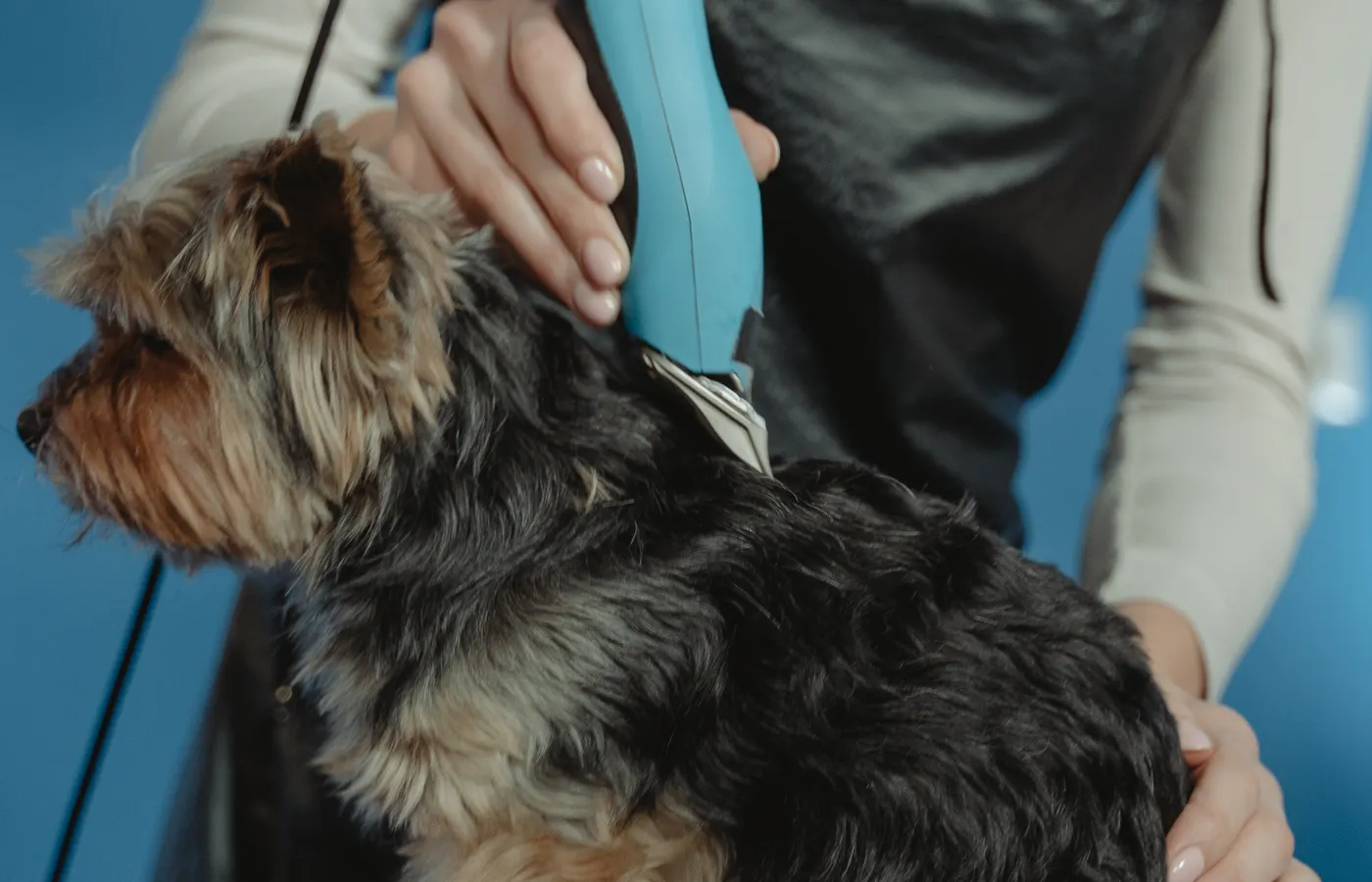
A blade number and a guard-comb label both describe cutting length, but they do not create the same workflow. A blade cuts at its own working depth. A guard comb spaces the cutting blade away from the skin and must travel through the coat before the blade can do its work. That makes coat preparation and attachment fit especially important.
In grooming discussions, owners and professionals repeatedly report long combs catching when a coat is not completely brushed, combed, clean, and dry. Those reports are experience, not a controlled comparison, but the mechanism is straightforward: the attachment cannot pass through a knot that a metal comb cannot pass through.
Record the complete combination
Write down the clipper, blade beneath the attachment, guard-comb length, direction, coat preparation, and body area. Recording only “number four” is ambiguous because blade numbers and colored comb sets use different systems. Published charts are starting points, not promises about the finished surface on every coat.
Check that the attachment is approved for the cutting system and locks securely. Do not improvise a fit. If the comb fills with cut hair, stop and clear it with the machine off. If hair folds, pulls, or refuses to feed, reassess dryness, tangles, blade condition, and pace rather than forcing another pass.
Prepare the coat before judging the tool
A cutting or finishing tool can only work with the coat that reaches it. Bathe when the coat type and the dog's health allow it, rinse completely, dry through to the skin, then brush and check with a metal comb. That sequence is not cosmetic busywork. Residue, damp sections, packed undercoat, and small tangles can change how a blade, guard comb, or shear moves. If a pass stalls, stop and find the cause instead of adding pressure. The experience reports cited for this guide repeatedly separate equipment problems from coat-preparation problems.
Set out only the tools needed for the next stage. Keep cords and hoses away from feet, provide a stable nonslip surface, and arrange light so skin folds and coat direction are visible. Touch the blade frequently with the back of a finger and rotate or cool equipment according to its manufacturer instructions. A dog that shifts, pants, turns toward the tool, or tries to leave is giving information. Shorter sessions can be more useful than forcing a complete haircut in one sitting.
Buy for the dog and the job, not the longest feature list
Start with the body areas you actually intend to maintain. Full-body clipping, feet and face work, coat blowout, and light outline trimming are different jobs. Write down the dog's coat type, approximate finished length, noise response, session location, and the person who will handle the dog. Compare published specifications against that list. A powerful motor, many accessories, or a long runtime is not automatically useful if the housing is difficult to hold or the dog will not accept the sound.
Prefer a system with replacement parts, clearly identified compatible blades or attachments, and accessible maintenance instructions. Consumable parts matter because a dull, dirty, damaged, or poorly fitted cutting system can pull hair even when the clipper body still runs. Keep the retailer decision separate from the technique decision. A product listing can tell you what is included; it cannot tell you whether a particular dog will stand comfortably for that setup.
Make the first session a controlled trial
Choose one easy, visible patch rather than beginning near the face, feet, armpits, tuck-up, or sanitary area. Let the dog investigate equipment while it is off. Introduce sound and vibration at a distance, rewarding calm behavior without trapping the dog beside the machine. When contact begins, use the tool flat and move with deliberate, light passes. Stop before either participant is tired.
After the trial, inspect the coat in neutral light and write down the tool, attachment, direction, and area. Unevenness is a reason to review preparation and technique, not to keep removing hair without a plan. Seek a qualified groomer or veterinarian when coat condition, skin changes, pain, behavior, or matting makes home work unsafe. This guide supports a purchasing decision; it does not replace hands-on instruction.
Use a written comparison before you order
Create a table with one row for each candidate and columns for intended coat types, working length or attachment range, replacement parts, cleaning steps, listed weight, cord or battery arrangement, return policy, and warranty. Enter only values the manufacturer or retailer publishes. Leave a cell blank when information is unavailable; a blank is more honest than an estimate. Add a final column for the practical constraint that could rule the option out in your home, such as a short hose, fixed speed, unfamiliar blade system, or housing that is too large for detail work.
Compare that table with a realistic session. Include setup, coat preparation, active grooming, interruptions to clear hair or change tools, and cleanup. This prevents one headline feature from dominating the decision. It also keeps the editorial reasoning independent of a temporary price or commission.
Before keeping a purchase, inspect it without using it on the dog. Confirm that all listed parts arrived, read the manual, identify maintenance points, and verify that compatible replacement items are available from a traceable source. Preserve packaging until the fit and handling decision is settled. A return window is not permission to test an unsafe or unsuitable setup on an animal.
Sources and verification
This article is based on published manufacturer guidance, institutional safety material, and identifiable community discussions; it does not claim a Vetted Picks Lab hands-on test. Sources were last checked 2026-09-28.
- https://wahlusa.com/amfile/file/download/file/318/product/417/
- https://www.reddit.com/r/doggrooming/comments/16rt7lx/
- https://www.reddit.com/r/doggrooming/comments/1327vqe/
Related guides
Frequently asked questions
Should I choose from specifications alone?
No. Published specifications identify compatibility and operating features, while a controlled introduction shows whether the dog and handler can use the setup safely.
Does a higher price prove a better fit?
No. Compare the intended coat, body area, replacement system, maintenance, handling, and return policy without inventing performance from price.
When should home work stop?
Stop for pain, distress, tight matting, abnormal skin, overheating equipment, damaged parts, or loss of safe control, and use qualified help.
Are retailer links active?
No. All commercial destinations remain PENDING until an approved affiliate account and verified destination are configured.
A source-checking workflow for this decision
For Clipper Blades vs. Guard Combs: Length Is Only the First Difference, separate three kinds of evidence before making a purchase. Manufacturer material can establish documented compatibility, included parts, operating controls, and maintenance instructions. Institutional guidance can establish general handling and safety boundaries. Owner or professional discussions can reveal questions specifications do not answer. A discussion is an experience report, not a controlled test, and must not become a universal performance promise.
Open the exact model page rather than relying on a search summary. Confirm that the model number, attachment family, power arrangement, and manual refer to the same product. Save the source URL and date. If a claim cannot be traced to the maker, an institution, or an identifiable discussion, remove it. Do not infer motor power, blade metal, battery duration, noise level, or professional approval from photographs and retailer adjectives.
Plan the complete session on paper
Write the sequence from arrival at the work area through cleanup. Include coat inspection, brushing or combing, bathing when appropriate, drying, tool setup, the limited working pass, breaks, equipment checks, and storage. Mark every moment when the dog must stand, turn, lift a paw, tolerate sound, or remain near a hose or cord. This exposes constraints a feature list hides. A convenient-looking tool can still be a poor fit when the dog cannot comfortably hold the required position.
Add a stopping rule beside every stage: skin that cannot be seen safely, a mat close to a fold, a blade that feels hot, a nail whose quick cannot be located, repeated withdrawal, or an unstable work area. The stopping rule protects the dog and prevents a maintenance job from becoming an emergency correction.
Evaluate the result without inventing a test claim
A buyer can record an individual session without presenting it as a universal product review. Note the dog, coat condition, body area, preparation, attachment, direction, and the reason the session ended. Avoid “best,” “professional grade,” or “quiet” unless a defined comparison and source support the statement. One dog’s acceptance does not predict another dog’s response.
A private photograph of the finished area can help the next session when the goal is a repeatable length or outline. Compare the result with the written plan, not with an unrelated dog whose coat differs. If work is uneven, investigate preparation, fit, pace, and direction before buying another device. If the process caused distress or exposed a handling limit, change the process or ask a qualified professional rather than escalating force.
Budget for ownership, not the checkout total
Add compatible replacement parts, sharpening or servicing where relevant, cleaning supplies, filters or abrasive replacements, safe storage, and station equipment. Do not insert a current price without a verified update process. “Check current price on Amazon” is a destination label, not a price claim, and remains inactive while the affiliate value is PENDING.
A smaller kit is often easier to understand than a case of overlapping accessories. Buy the core item for the defined job, verify that it can be maintained, and add an attachment only when a recorded task requires it. This makes it easier to notice when a part is damaged, incompatible, or used outside the maker’s instructions.
Final selection note
Keep the written comparison with the tool manual and grooming record. Recheck published specifications before replacing attachments because product families can change. If a future retailer destination is activated, confirm that it points to the same model discussed here; otherwise leave the CTA inactive rather than sending a reader to a merely similar item.