Home › Guides › Deshedding Brush: Choose the Tool Your Dog Will Let You Finish With
Home Grooming
Deshedding Brush: Choose the Tool Your Dog Will Let You Finish With
Vetted Picks Lab · Source-led editorial guide
Affiliate disclosure: Vetted Picks Lab may eventually earn from qualifying retailer links. No paid links are active yet; product references are editorial and current-price links remain pending.
A deshedding brush should reach loose coat without snagging, and your dog should tolerate enough passes to finish the area you started. Check both before judging the pile of hair it removes. On a dense coat, a brush that clogs quickly or makes the dog pull away may be less useful than a slower tool that lets you complete the session.
Why a dog brush for shedding can stall On one fine-coated husky, a slicker brush clogged after two passes. A rake and a comb worked, but neither solved the owner’s problem. In another household with two huskies , a shedding blade replaced a FURminator: it moved faster and did not hold fur in the tool. A different owner bought the blade after hearing that comparison and reported that their huskies liked it. Price did not settle the choice either. One buyer passed on a $75 Coral slicker brush and was happy with a $12 alternative. That was a result with one dog and one brush, not a test showing that the cheaper brush will reach every coat.
How to use a deshedding brush for dogs that resists grooming A dense-coated husky found a FURminator uncomfortable: it pulled and broke hairs, and the dog became sore. An undercoat rake removed loose hair more effectively but was tolerated for only a few strokes. A rounded-tip slicker was easier on the dog. A KONG ZoomGroom was tolerated longest, although removing a substantial amount of hair took longer. The owner settled into short rake passes followed by slicker passes. When the rake met too much resistance, the pass stopped or the tool changed. The amount collected mattered, but so did how long the dog would allow the work to continue.
Check which dog deshedding tool is actually being compared FURminator’s deShedding edge and its Grooming Rake are different tools. The Grooming Rake has rotating metal teeth. An owner who used that rake on a husky mix for about ten years found that its turning teeth bound up less readily than the fixed teeth on other rakes they had tried. Another owner found a blade-style tool effective but prone to snagging small tangles. A grooming rake with longer, wider-spaced teeth pulled out loose undercoat and felt better to that owner’s dogs. A complaint about one working head cannot settle whether every tool under the same brand will suit a particular coat.
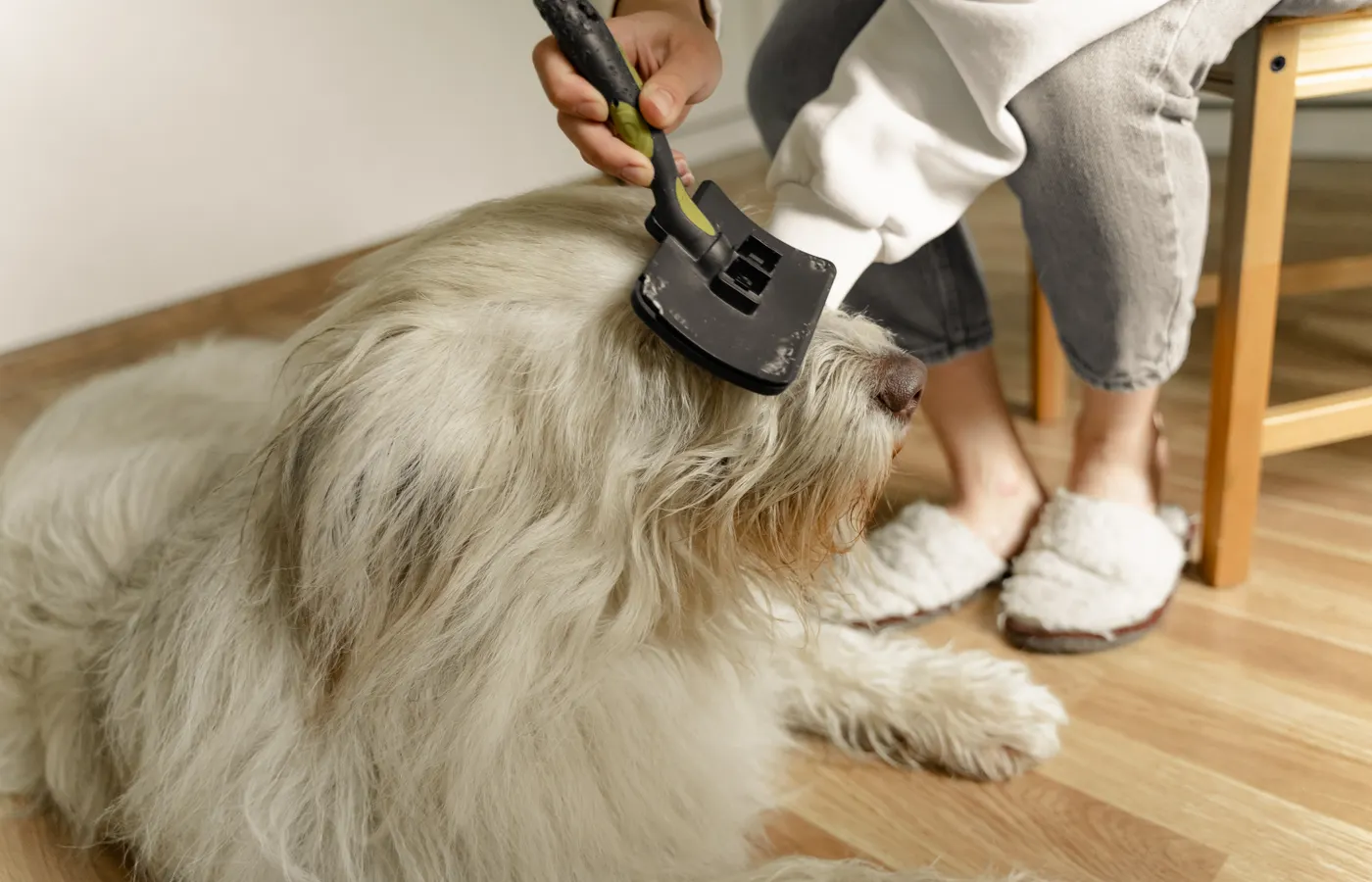
Real-world grooming context. Photo: Pexels.
Why a dog deshedder can fill up while the floor still needs cleaning One first-time husky owner used a FURminator at least weekly yet reported vacuuming the home three times a day during a heavy spring shed. Another owner used a wide-spaced rake first to loosen dead undercoat, then a closer-spaced rake after the hair moved more freely. Those experiences give you two separate checks: what comes out during brushing, and what you still have to clean up afterward. Do not judge the second by looking only at the first.
Is an undercoat rake for dogs always the next step? No. The sensitive husky also felt pulling from the rake. Slower, gentler strokes helped, but the owner switched back to the slicker when resistance increased. If a rake catches repeatedly, note where it happens and whether the dog will accept another short session. A tool that reaches the undercoat is useful only for the areas you can brush without forcing it.
The preserved guide above remains the controlling editorial text. Use it with a written record of the dog, coat condition, body area, tool or attachment, direction, and the point at which the session stopped. That record helps distinguish a coat-preparation problem from a tool-fit or handling problem without turning one household’s outcome into a universal product claim.
For buying decisions, verify the exact model and compatible parts on the manufacturer’s current page. Published specifications can establish what a tool is designed to accept, but they cannot establish that a particular dog will tolerate its sound, vibration, contact, or required position. Leave any unverified field blank and do not infer blade material, runtime, noise, price, rating, or professional approval from a marketplace title.
Build the surrounding routine
Inspect the coat and skin in good light, use stable nonslip footing, and prepare only the tools required for the next limited step. Brushing, comb checking, bathing when appropriate, thorough drying, clipping, scissoring, nail care, and cleanup create different demands. Plan breaks and stopping rules before beginning. Stop for pain, distress, tight matting, abnormal skin, poor visibility, overheating equipment, damaged parts, or loss of safe control.
A smaller, maintainable kit is more useful than overlapping accessories that cannot be identified or serviced. Include replacement blades or abrasives where relevant, cleaning supplies, storage, and access to instructions in the ownership cost. Current retailer prices are not stated because there is no verified price-update system.
Does this article claim a Vetted Picks Lab hands-on test?
No. The preserved manuscript reports its sources and scenarios in its original wording. Additional navigation and safety context does not convert those reports into a new hands-on test.
How should a product be selected?
Match documented compatibility and intended use to the dog’s coat, body area, handling needs, work space, and maintenance plan. Price and accessory count alone do not establish fit.
When is professional help appropriate?
Use a qualified groomer or veterinarian when tight mats, skin changes, pain, difficult behavior, sensitive anatomy, or an unsafe working position exceeds the handler’s training or equipment.
Are affiliate links active?
No. Commercial destinations are centralized as PENDING. “Check current price on Amazon” remains an inactive label until an approved program and exact destination are verified.
Revisit the written plan when the season, coat condition, mobility, or tolerance changes. A tool that suited one stage may no longer suit the same dog after a coat transition, injury, aging, or a change in the work area. Compare the new situation with the earlier record before changing several variables at once. Introduce one change, keep the session limited, and record why it helped or failed. This preserves the original article as evidence while making the next decision more precise.
When a manufacturer updates a product family, verify the exact model, manual, attachment fit, and replacement parts again. Do not assume a familiar product name means the construction stayed identical. If the relevant source is unavailable or ambiguous, omit the specification and ask the manufacturer or a qualified professional. Honest uncertainty is safer than filling the gap with a copied retailer claim.