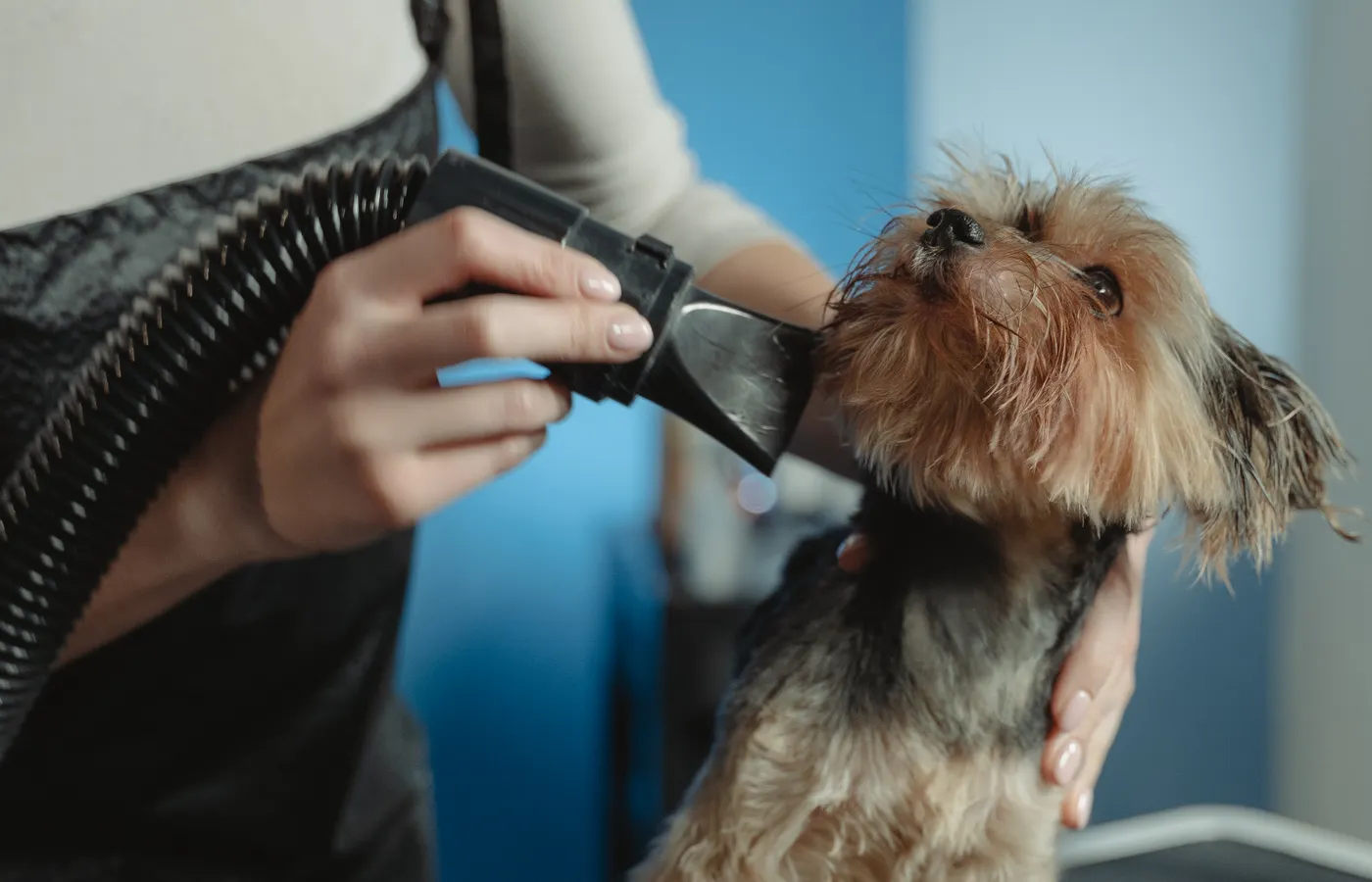
The safest way to request a Poodle haircut is to describe five separate decisions: body length, leg length, face, feet, and tail. Add a photo, then ask the groomer to repeat those decisions back. A style name alone is not enough. “Puppy cut” can mean a lightly shaped young show coat, one length all over, or only a face, feet, and sanitary trim, depending on who hears it.
Poodle cuts should be written as parts, not one name One owner asked for a familiar Poodle cut with boots and a pom tail, only to hear another groomer call the same look a clown cut. Other owners reported that “teddy bear” and “puppy cut” produced a different finish at different shops. The practical fix was to stop asking for a named cut and start giving instructions. A useful request can be short. State the body length first. Say whether the legs should match the body or stay fuller. Choose a clean face or a rounded face. Choose clean feet or rounded feet. Say how much tail hair stays and whether the base is clipped. If the topknot and ears should remain long, name them separately. One owner eventually reduced the request to exact areas and tools: a short blade on the body, a longer comb on the head, ears, and tail, round feet, and a close but unshaved finish. Another owner asks for a 3/8 inch body with a clean face, clean feet, and clean tail. These requests leave less room for a groomer to invent the missing parts.
Puppy cut Poodle requests can produce opposite results A puppy’s first haircut was booked because the hair around the rear was becoming dirty. The owners requested a puppy cut with about half the length removed and used the word “fluffy.” The body came back far shorter than they expected, while the head had a shape they did not like. The haircut was not necessarily poorly executed. The problem was that “half” and “fluffy” had not established a finished body length or head outline. Another owner was disappointed by a second haircut after changing groomers. The first new appointment looked acceptable because little hair had actually been removed and the coat had been fluffed. At the next visit, the owner asked for a little shorter. The result had bald-looking patches and lost the earlier shape. Their former groomer said restoring the previous outline would take three grooming sessions. An experienced observer thought a guard had been run over the coat without the scissor work and straight blow-dry needed for the expected finish. The disagreement matters. Some groomers use “puppy cut” for an even pet length. Others use it for introductory work on a young dog, especially the face, feet, and sanitary areas. In Poodle show language, it can describe a much fuller coat that is shaped rather than shortened evenly. Before the appointment starts, replace the phrase with a measurable body length and a separate face instruction.
Poodle grooming styles change when the tool changes The same length request can look different after a guard comb, a finish blade, or hand scissoring. That difference explains why a reference photo helps but does not complete the request. Ask which tool will create the body length in the photo. Ask whether the legs will be clipped with the body or blended later with scissors. Ask whether the coat will be dried straight before the final pass. One miniature Poodle went to a professional for the first and last time at four months old. The owner did not blame the groomer, because the desired result had not been explained clearly. Afterward, the owner tried scissors at home, accepted that the first attempts were uneven, and continued with regular scissor trims. Clippers were reserved for the hair between the paw pads. That approach conflicts with owners who prefer a repeatable clipper length. One home groomer uses a Wahl KM10 with a number 10 blade and either a number 4F or 5F body blade, and had used the setup for two years. Another uses an Andis UltraEdge with number 10 and 7 blades and estimated that home grooming had repaid the equipment cost about ten times over. The shared lesson is not that scissors or clippers always win. It is that the chosen tool becomes part of the haircut specification.
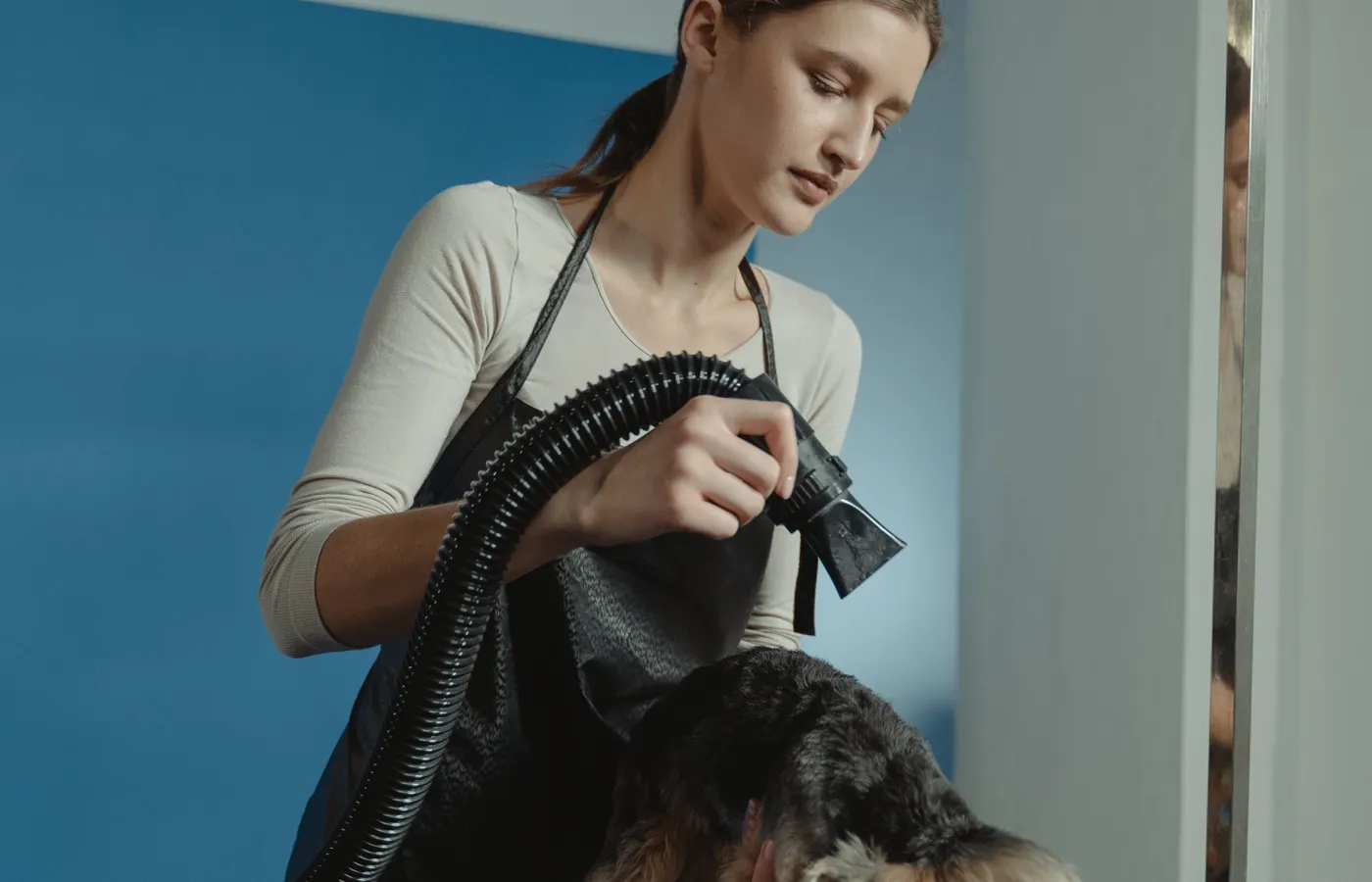
Cheap clippers can turn a simple cut into a four hour job One owner began with a clipper set from Walmart and found that it would not cut the coat effectively. The alternatives recommended by experienced home groomers were full-size detachable-blade machines rather than small adjustable trimmers. A different owner had used an Andis two-speed clipper for three years after buying the first grooming setup for about $400. That equipment paid for itself during the first year. Another home groomer bought a used Andis AGC two-speed for roughly $90 to $100. The same person suggested budgeting $50 to $75 for a useful scissor set after learning which scissors get used most. In that home, the equipment could repay itself after two to four cuts, but a complete haircut still took about four hours. The savings were real, and so was the time cost. A powerful clipper does not decide the style. It only makes the planned pass more consistent. Write down the blade or comb used on the body, then record whether the legs, head, ears, and tail were clipped or scissored. If a cheaper machine jams or stops cutting, changing the style name will not fix the tool.
Record the successful haircut before it grows out Take photographs from the front, both sides, and the rear on the day the haircut looks right. Ask for the body blade or guard-comb length, and write down which areas were hand scissored. Record the face, feet, topknot, ears, and tail separately. Those notes matter when the regular groomer moves or another person completes the appointment. At drop-off, compare the written plan with the current coat instead of asking for “the same as last time.” If the coat condition prevents the agreed length, require a phone call before the plan changes. At pickup, ask what tool touched each area. That answer gives you a usable recipe for the next appointment. A successful Poodle haircut is repeatable because its instructions survive a change of groomer. The name can stay on the booking form, but the body length, leg shape, face, feet, tail, and tools should determine what comes home.