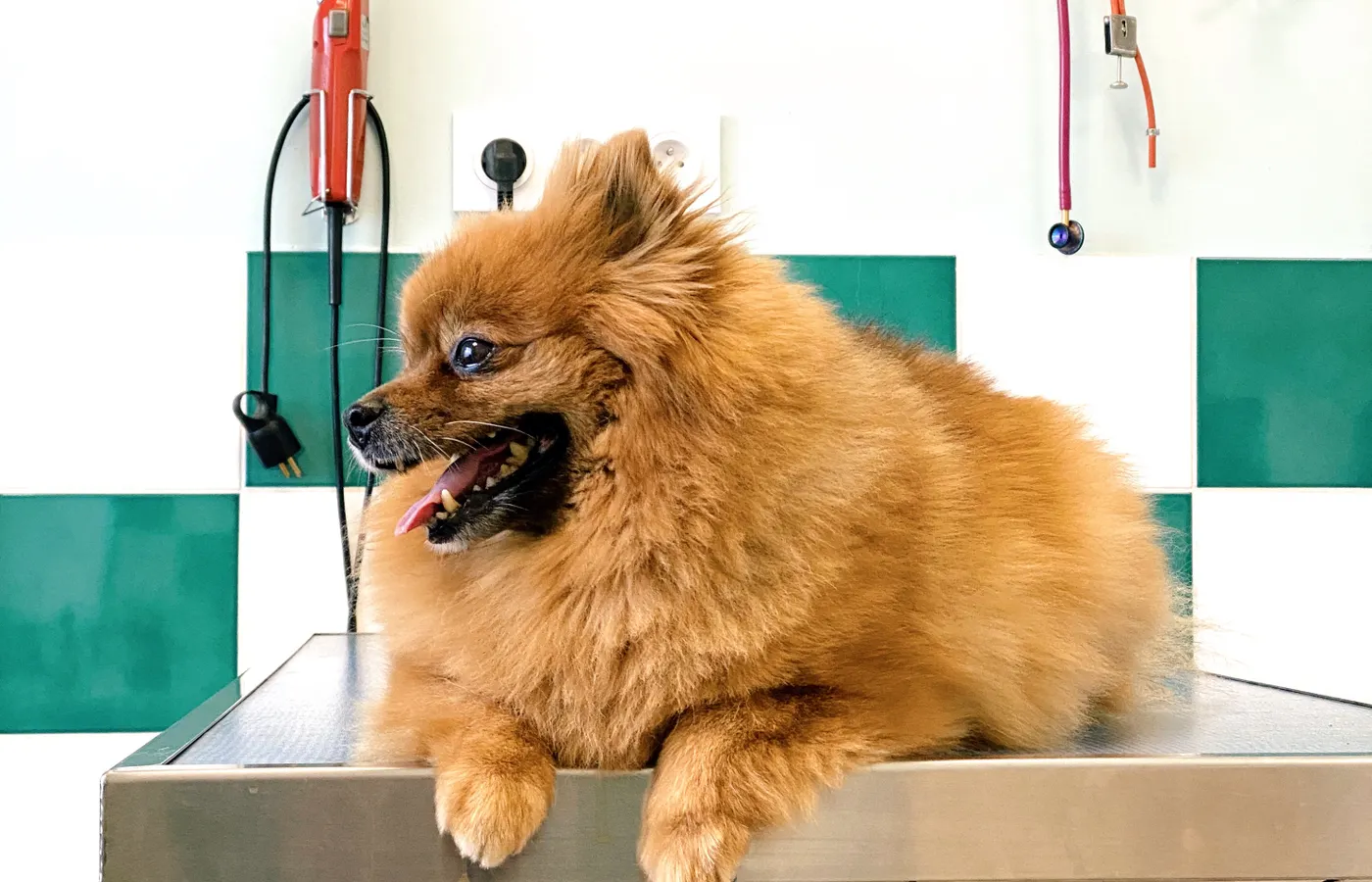
Pomeranian grooming starts with gentle brushing in sections and a comb check beneath the fluffy surface. A tidy-looking coat can still hide mats. If you book a trim, agree on the length that will remain and the exact services requested before leaving your dog. Comfortable brushing and a clear salon handoff solve different parts of the same job.
Grooming a pom: gentler does not establish how deep you brushed One owner of a nearly six-month-old Pomeranian stopped using a slicker because it pulled the coat and the puppy hated it. A human Tangle Teezer felt gentler, but the owner remained unsure whether it reached far enough into the fluff. Another owner had bought a human detangling brush too and found it ineffective, then used a slicker recommended by a groomer. Those outcomes do not establish a universal winner. Tolerating the contact and clearing the coat underneath are separate checks. A third owner brushed a six-month-old Pomeranian every day with a slicker, only to discover at a grooming appointment that the undercoat was matted. The groomer recommended longer bristles and line brushing. Part the coat and work through small sections rather than brushing only the visible outline. Follow with a metal comb to check for tangles the brush missed. Ask the groomer to demonstrate the depth and angle on your own dog's coat if you cannot tell what your passes reach.
An injury can make the usual brushing position unusable A Pomeranian with a fractured foot developed mats while wearing a cone and spending three weeks in a splint. Brushing attempts made the dog wriggle, and the owner feared hurting the foot by holding her still. The difficulty was access and safe handling, not simply a neglected brushing schedule. Another Pomeranian household encountered cone-related mats after knee surgery. Their changed approach included spray conditioner, a wait before combing, and a greyhound-style comb while a partner supplied treats. Tight mats also required cutting in that household, so this was not a demonstration that conditioner alone clears every mat. It is a reason to explain the injury and handling limits before someone attempts the coat work.
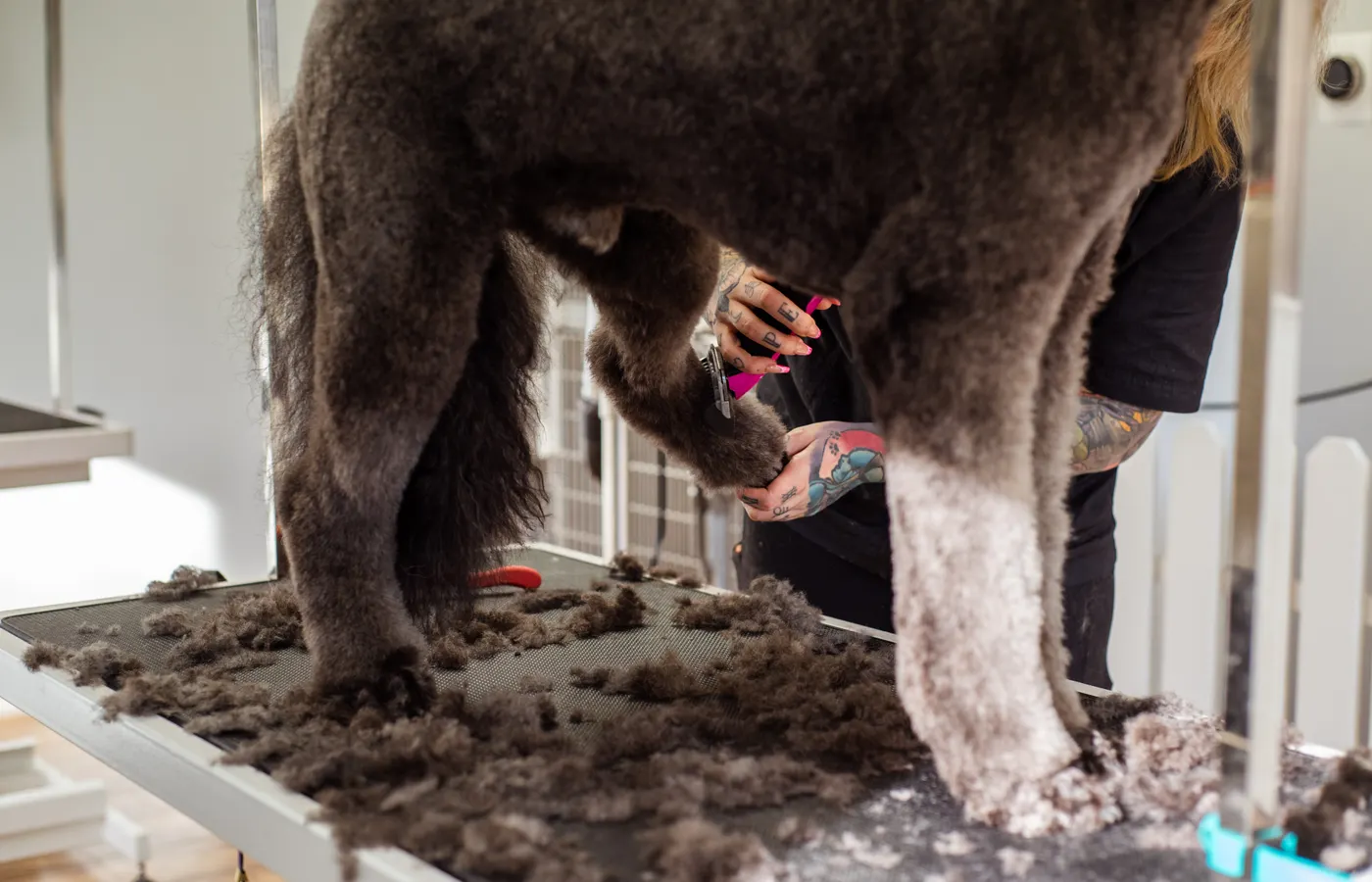
Dog grooming for pomeranians: confirm inches, not just a number One owner changed groomers after a regular groomer left. The owner read a phone list requesting a two-inch guard and showed the intended length with their fingers. The new groomer said she understood, but later explained that she had interpreted the request as a #2 guard. The owner reported a cut of about one-quarter inch instead. A verbal agreement had not prevented the mismatch. Confirm the actual length intended to remain, rather than relying on a guard number alone. This describes a failed handoff, not a recommendation for a two-inch all-over cut or a rule that every brand's #2 means the same length. Routine grooming need not include a full-body shave.
Keep the salon tasks that your household still needs A San Francisco owner described a $140 full grooming service, then switched to having the salon do nails and a sanitary trim while completing the rest at home. The main reason was the Pomeranian's stress at the groomer, not an inability to pay for the full service. Splitting the work offered a middle route between an entire salon appointment and doing everything alone. Home handling still took preparation in another household. A rescued Pomeranian needed about six months of exposure training before holding still long enough for grooming; nail work remained difficult. Short, rewarded sessions are preparation, not a promise that a new home routine will be immediately manageable. Before the next handoff, state which areas you have actually combed, which are inaccessible, and which services the salon should complete. Have the groomer repeat the intended remaining length. That makes the appointment specific to this Pomeranian's coat and handling limits instead of leaving the work hidden inside a haircut name.