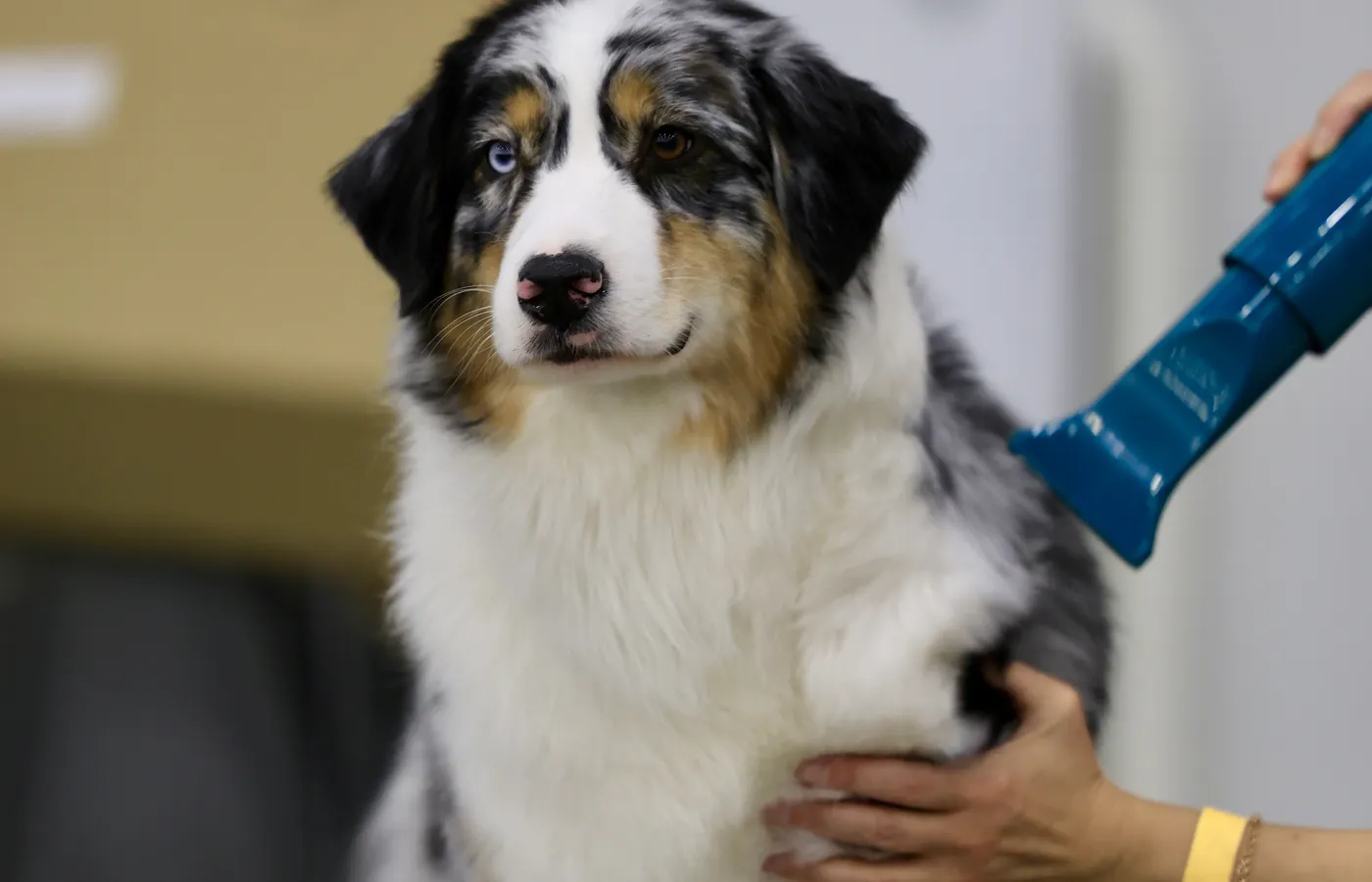
Husky grooming means removing loose coat, washing when needed, drying thoroughly, and maintaining the nails, not automatically giving the dog a haircut. Before starting a home bath, decide how you will finish the drying. A machine that cannot get through the coat, or one the dog will not tolerate, can turn the last part of grooming into the hardest part.
Siberian husky grooming: the same dryer can produce different results One owner bought a high-velocity dryer for $75 after previously paying $10–20 per dog to use drying equipment at grooming locations. The owner found the purchase worthwhile. Another owner tried that same dryer on a woolly Husky and found it lacked the power to get through the thick coat. Switching to a Flying Pig dryer solved that particular problem. Those experiences disagree about the equipment, but they also describe different coats. A recommendation that works for one Husky is not a test of your own dog's drying needs. Check what the airflow actually reaches. Moving the outer hair is not the same as finishing the coat underneath. Noise creates a separate problem. One owner tried a shop vacuum for blowing the coat but found its base unit and hose frightening to the dog. The replacement routine lasted 13 years: thorough toweling, a hair dryer, a long walk, and additional hair-dryer work when necessary. The owner also noticed that the wheeled base moving around near the belly and armpits contributed to the difficulty. That is an individual drying history, not a promise that a walk will finish every wet coat. It does show why buying more airflow may leave the handling problem untouched.
Husky dog grooming: a familiar coat can still change One owner had known a Husky's shedding pattern for more than four years, then encountered about two months of thick, felt-like sheets of loose coat. The change stood out because it differed from the dog's previous shedding. Treat a change like that as something to inspect, rather than a reason to keep repeating the usual brushing session. Look through the coat instead of judging only the hair collected on the brush. Tool changes can matter too. Another owner stopped using a FURminator after a groomer identified coat damage and switched to an undercoat rake and an Equigroomer. The owner reported better loose-coat removal afterward. That experience supports checking the result on the dog, rather than measuring success by the size of the fur pile alone.
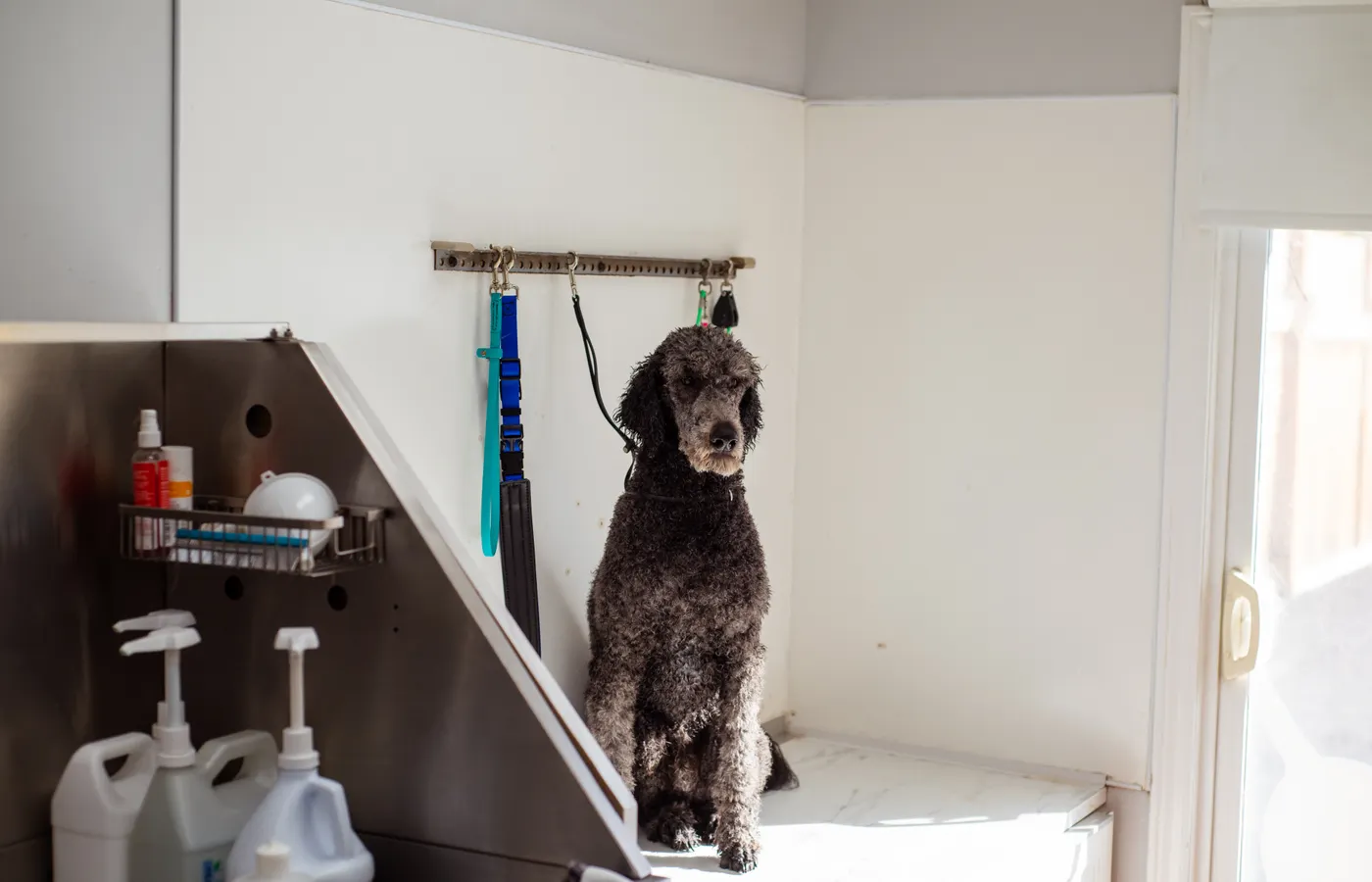
How to groom a husky when nail handling has become difficult A Husky that previously accepted handling became unwilling to have its feet touched after an upsetting nail-care experience. A different groomer rebuilt the process gradually. The first two visits involved treats and brief contact with the feet, first by hand and then with the clipper. No nails were cut. On the third visit, the groomer began clipping slowly while continuing the rewards. The improvement persisted after the owner moved and began using another groomer. The useful detail is the order. Contact with the tool came before cutting; cutting was not the requirement for every appointment. Short sessions and rewards are practical tools, but they do not establish a fixed timetable for every Husky. Ask a groomer what a preparation-only visit would involve if foot handling is the obstacle.
Put the unfinished part first Before booking or starting a full groom, identify what has stopped the previous attempt: reaching the undercoat, completing the drying, or handling the feet. Then plan that part explicitly. Remove loose coat gently, rinse shampoo completely, and check that drying is finished. If you use a salon, specify the requested services and discuss any coat cutting separately. A bath-and-brush appointment should not depend on an assumed haircut. For a difficult nail session, a successful appointment may be a calm introduction to the clipper. For a difficult bath, success includes a drying method that finishes the job. Judge the routine by what it completes comfortably, not by how many services were attempted at once.