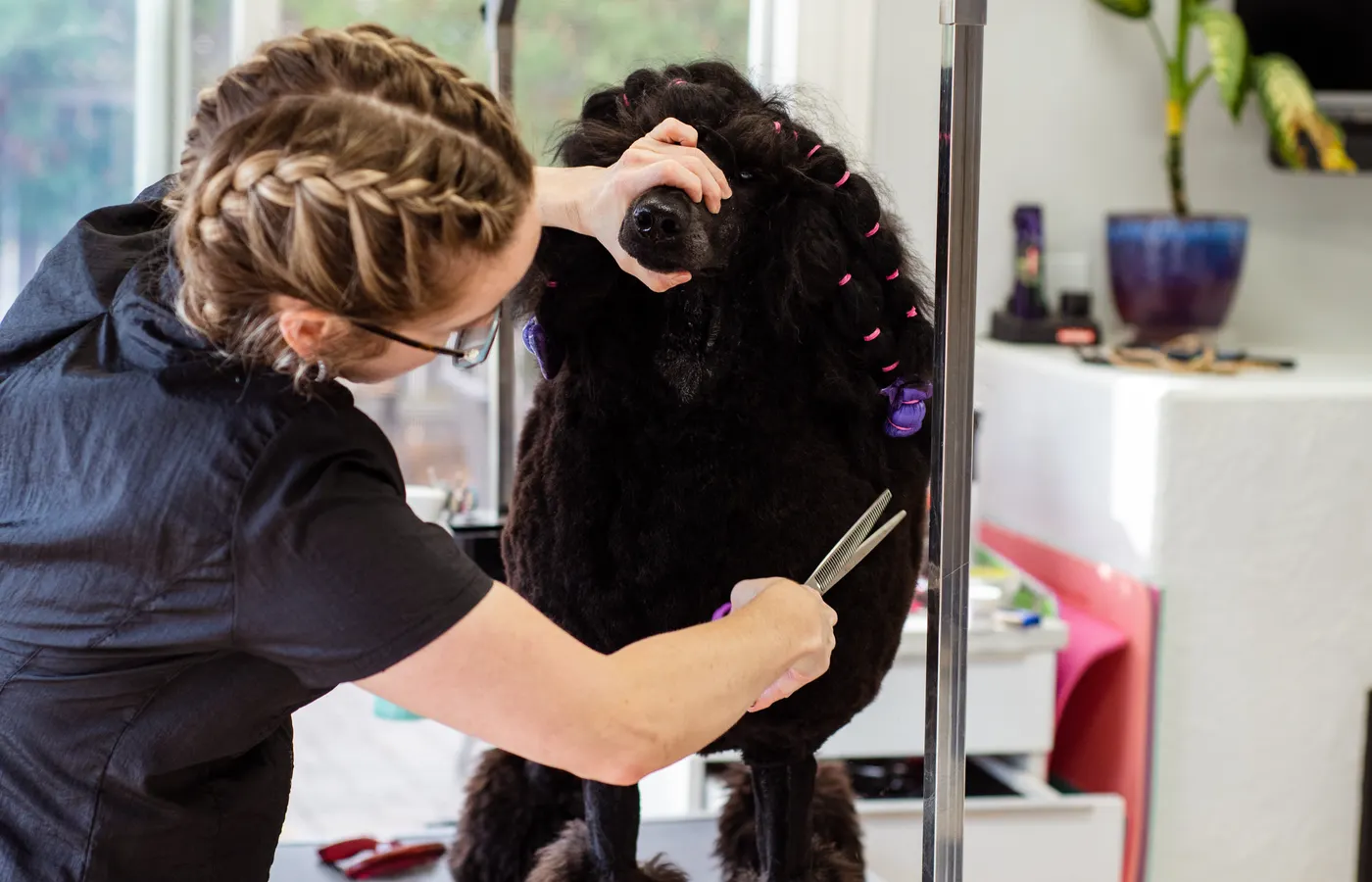
A successful Goldendoodle haircut starts with a written map, not a style name. Give the groomer a length for the body, legs, head, ears, muzzle, and tail. Add photos of your own dog after a haircut you liked. A reference photo helps, but it cannot show how a different coat will fall, how much length is hidden in curls , or which parts of the dog will tolerate detailed scissor work.
Cuts for Goldendoodles Need a Written Map Words such as “teddy bear,” “puppy cut,” and “keep it long” leave too much room for interpretation. One owner used “keep it longer” through three appointments and still brought home an eight month old mini with a shape that felt wrong. The owner eventually stopped trying to correct the whole cut at the salon, bought thinning shears, trimmed the top at home, and dampened that area so the curls would return. Another owner spent about ten minutes explaining the desired result, showed several pictures, asked to keep the curls, and requested a rounded face. The coat was maintained and free of mats. The finished head still looked square and flat. A few days later, after the salon blowout settled and the curl pattern came back, the cut looked better, though it still did not match the request. Write the request by area. A usable note might say that the body and legs should stay the same length , the muzzle should be tight and round, the paws should be round, the ears should be short, the eye corners should be softened with thinning shears, and the top of the head should lie flatter. A different owner preferred the opposite proportion, with the legs left between one half and three quarters of an inch while the head stayed longer. Both plans can work. They are different silhouettes, so the groomer needs to know which one you mean.
Doodle Haircuts Can Change After the Blowout Settles Do not judge only the fluffy pickup day finish. Salon drying lifts and straightens the coat, and that can exaggerate a square head or make the body look fuller than it will several days later. Take one photo at pickup and another after the coat has settled. That pair gives the next groomer more useful information than a photo of an unrelated dog. The opposite problem also happens. One owner showed a reference image and received a dog with the nose clipped extremely close while the body was barely shortened. After two disappointing professional cuts, another owner stopped repeating the same request and began doing more of the work at home. The useful lesson is not that home cutting always wins. It is that repeating an ambiguous request rarely fixes an ambiguous result. Coat texture also limits copying. A rounded face in a photograph may depend on thicker hair in the muzzle and cheeks. If your dog has less hair in those areas, the same outline cannot be reproduced exactly. Ask which parts of the photo are realistic on your dog before the bath and cut begin.
A Home Cut Needs One Repeatable Length Before It Needs a Style One home groom used an Andis ProClip AGC one speed clipper with a five eighth inch Andis universal guard. The owner completed the body, then decided that thinning shears would make the next attempt easier around the face and elbows. That sequence matters. A single repeatable body length gave the owner a baseline, while the unfinished transitions showed where a second tool was actually needed. If you cut at home, record the machine, guard, and body area immediately. Do not write only “short” or “medium.” Another owner used seasonal instructions of one and one quarter inches in winter, one inch in fall, and one half inch in spring and summer. Those numbers describe a clear change. They also reveal that seasonal length is a household choice, not a universal schedule. Stop after a small section and inspect the outline from the side. If the body length is right but the face, elbows, or leg transitions look abrupt, more passes with the same guard will not create a softer blend. That is a change of technique, not a reason to keep shortening the whole dog.
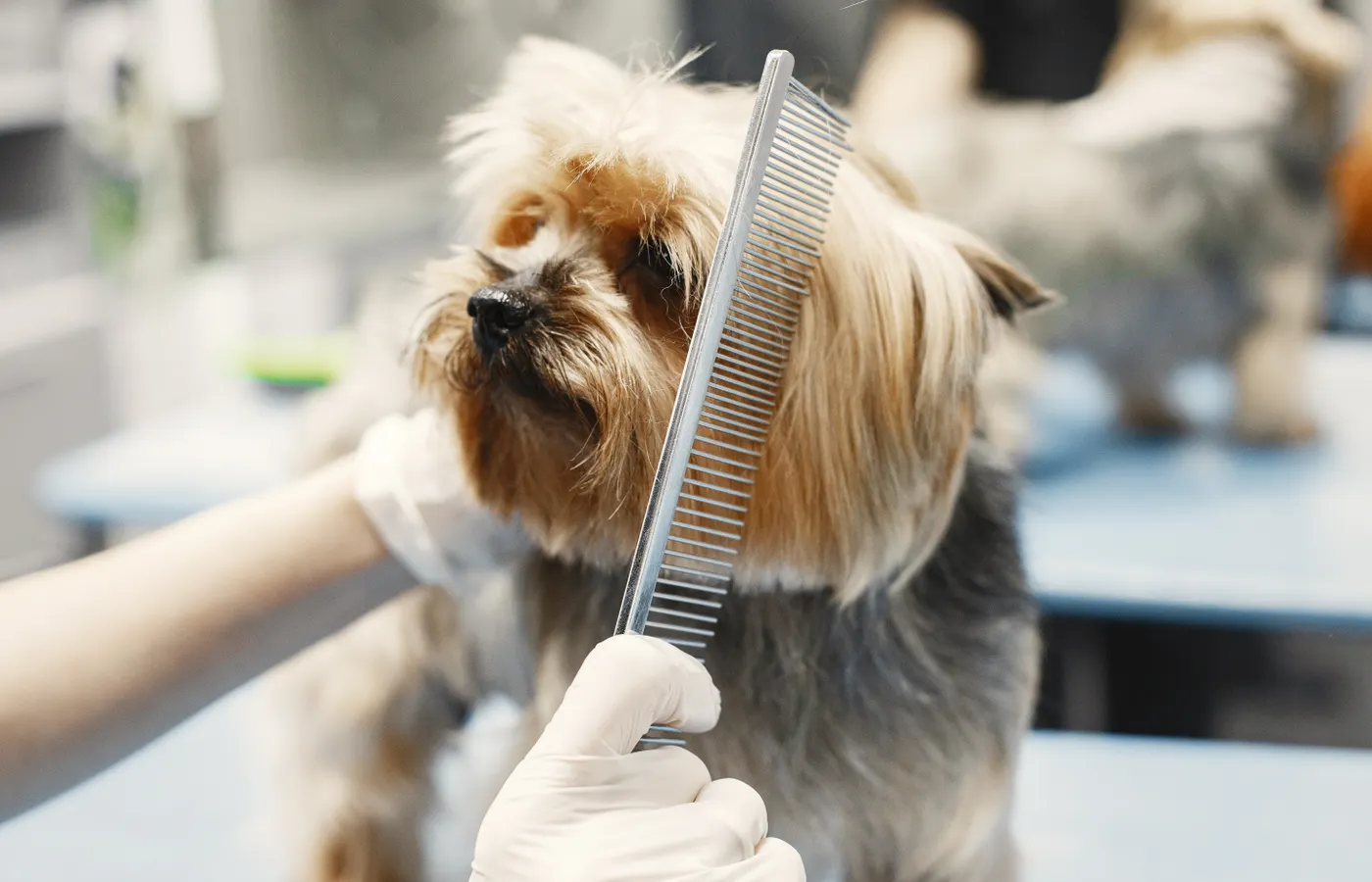
Mini Goldendoodle Haircuts Still Need Area by Area Instructions “Mini” describes size, not a separate haircut. On a smaller dog, an extra half inch can change the apparent proportion of the head and legs quickly. Specify the body, legs, muzzle, ears, and top of head separately. If you want the same length everywhere, say so. If you want longer legs or a fuller head, name those areas rather than relying on the word “mini.” For a first full haircut, separate the ideal style from what the dog can comfortably finish. Some young dogs manage clippers on the body before they accept detailed work on the head or legs. A partial result can be a handling limit rather than a styling decision. Record what was completed, then use that information when planning the next appointment.
The Best Instruction Is the One You Can Compare Next Time Before the appointment, write one line for every area and attach photos of your own dog when possible. After pickup, record the actual result beside the request. Note what looked better after several days and what remained wrong. That turns the next Goldendoodle haircut into a controlled revision instead of another attempt to explain the same style name.