Home › Guides › Goldendoodle Grooming: Check the Coat, Brush and Setup Separately
Breed Grooming
Goldendoodle Grooming: Check the Coat, Brush and Setup Separately
Vetted Picks Lab · Source-led editorial guide
Affiliate disclosure: Vetted Picks Lab may eventually earn from qualifying retailer links. No paid links are active yet; product references are editorial and current-price links remain pending.
Goldendoodle grooming means brushing small sections, then checking them with a metal comb. A fluffy surface can hide tangles. If the dog resists, compare the brush, the troublesome coat area and the grooming station separately.
Grooming a goldendoodle: a recommended brush can still fail After trying several Amazon brushes, one owner found that a large Chris Christensen Big G was the only brush their medium Goldendoodle tolerated. Another household reported no mats with appropriately sized brushes, while brushing its mini and standard every two or three days. But a fine, frizzy coat caught on that slicker; straight pins worked instead. Another owner found an Amazon alternative as effective as their Chris Christensen brush. Price did not settle the comparison. A self-cleaning slicker was tolerated but slow because its bristles were short. Switching to an unnamed green, curved slicker made brushing faster. Its exact model remains unknown.
How to groom a goldendoodle: check each area In one household, a slicker suited the fluffier Goldendoodle while the other developed chest and belly mats. Check each dog's underside separately. One routine combined daily Big G brushing, a wide-tooth metal comb every other day and a fine-tooth comb every three days. Those are reported intervals, not a universal schedule. A tail left unbrushed for two weeks during lake visits took nearly ten hours of unsuccessful work across four days. Cowboy Magic helped with the remaining knots, but some tangles had already been cut away and the suggested amount was exceeded. Do not copy that rescue attempt.
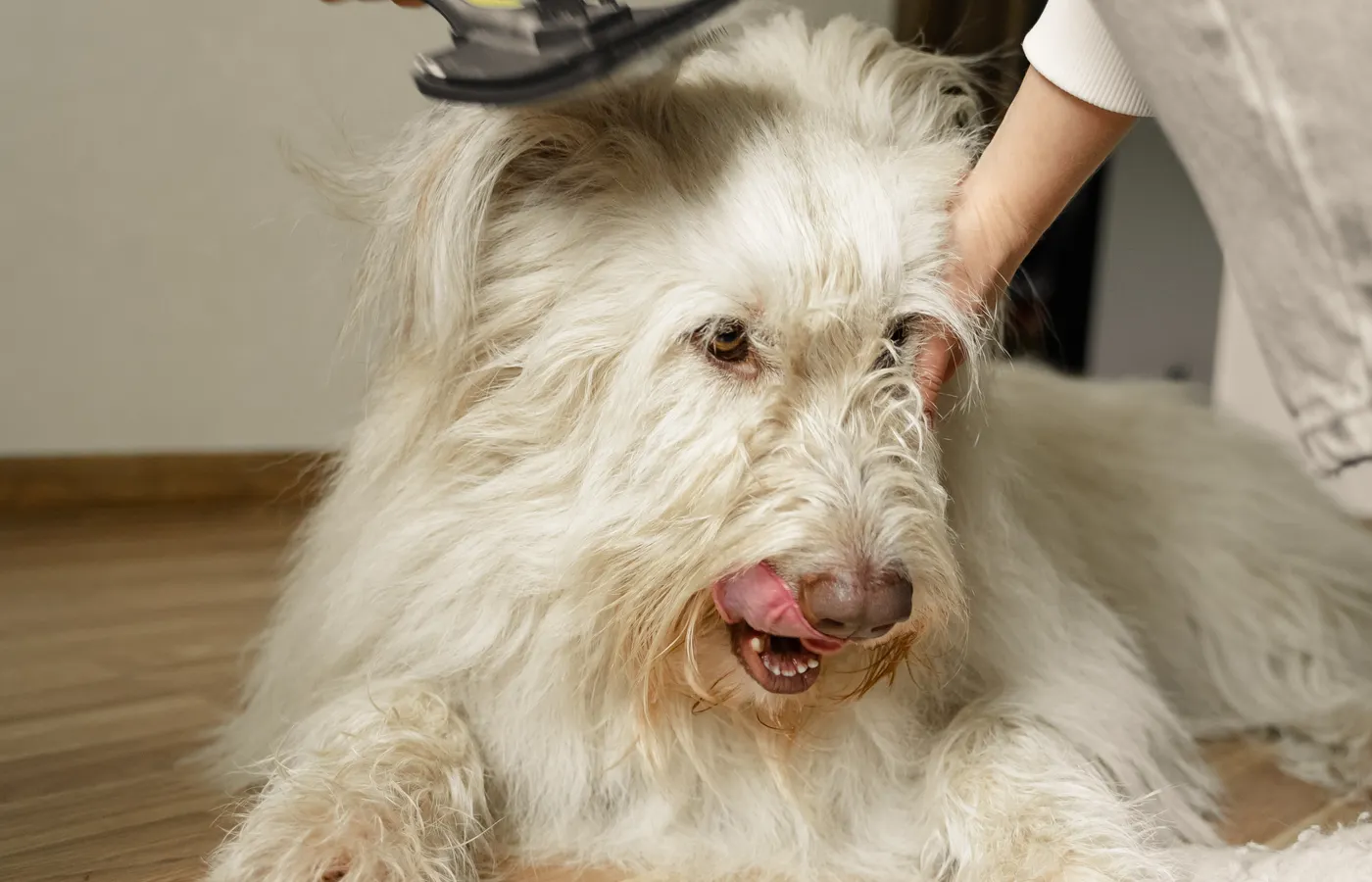
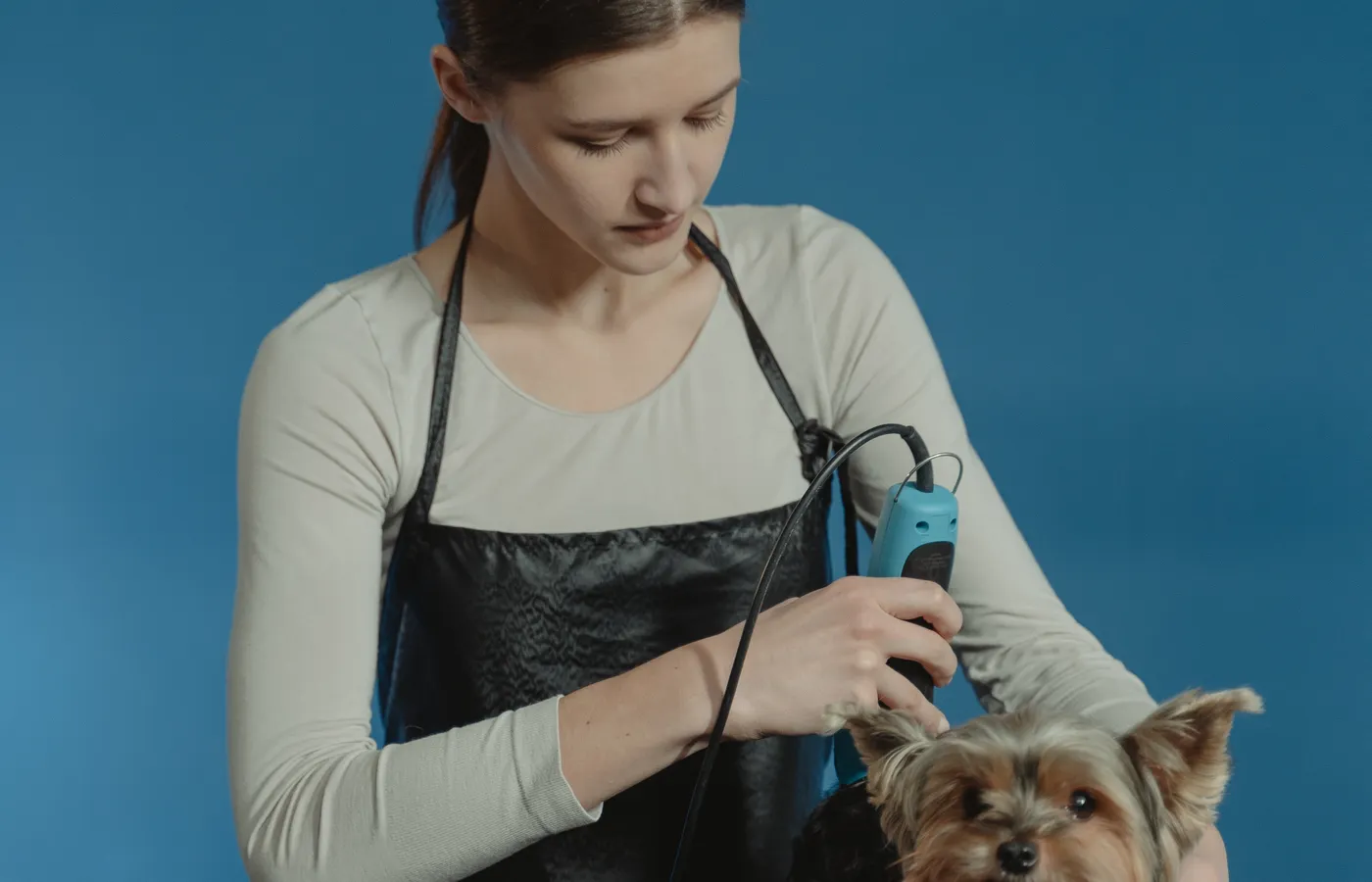
Real-world grooming context. Photo: Pexels.
Cooperation and cleanup are separate jobs An owner replaced an unsuccessful brushing setup with a small desk, a fitted yoga mat and a window view. At two years old, their dog came when called for brushing. This does not identify which change helped. Another dog accepted salon brushing but refused it at home. A monthly blowout and brushing touch-up cost that owner $25, a historical service price rather than a current quote. A long-pronged slicker suited one thick coat but was disliked on a thin, curly coat. That owner used a human Tangle Teezer instead, checking small sections with a flea comb. THE Stuff detangler required attention to slippery overspray; the owner worked on carpet or mopped afterward. Follow the product's directions. Brush cleanup has its own snag. One owner swiped along the pins but still needed a vacuum to remove the remaining hair from the brush . Record the areas where the comb catches, the brush used there and the setup the dog accepts. Bring that coat map to the next grooming appointment, rather than relying on a brand name alone.
The preserved guide above remains the controlling editorial text. Use it with a written record of the dog, coat condition, body area, tool or attachment, direction, and the point at which the session stopped. That record helps distinguish a coat-preparation problem from a tool-fit or handling problem without turning one household’s outcome into a universal product claim.
For buying decisions, verify the exact model and compatible parts on the manufacturer’s current page. Published specifications can establish what a tool is designed to accept, but they cannot establish that a particular dog will tolerate its sound, vibration, contact, or required position. Leave any unverified field blank and do not infer blade material, runtime, noise, price, rating, or professional approval from a marketplace title.
Build the surrounding routine
Inspect the coat and skin in good light, use stable nonslip footing, and prepare only the tools required for the next limited step. Brushing, comb checking, bathing when appropriate, thorough drying, clipping, scissoring, nail care, and cleanup create different demands. Plan breaks and stopping rules before beginning. Stop for pain, distress, tight matting, abnormal skin, poor visibility, overheating equipment, damaged parts, or loss of safe control.
A smaller, maintainable kit is more useful than overlapping accessories that cannot be identified or serviced. Include replacement blades or abrasives where relevant, cleaning supplies, storage, and access to instructions in the ownership cost. Current retailer prices are not stated because there is no verified price-update system.
Does this article claim a Vetted Picks Lab hands-on test?
No. The preserved manuscript reports its sources and scenarios in its original wording. Additional navigation and safety context does not convert those reports into a new hands-on test.
How should a product be selected?
Match documented compatibility and intended use to the dog’s coat, body area, handling needs, work space, and maintenance plan. Price and accessory count alone do not establish fit.
When is professional help appropriate?
Use a qualified groomer or veterinarian when tight mats, skin changes, pain, difficult behavior, sensitive anatomy, or an unsafe working position exceeds the handler’s training or equipment.
Are affiliate links active?
No. Commercial destinations are centralized as PENDING. “Check current price on Amazon” remains an inactive label until an approved program and exact destination are verified.
Revisit the written plan when the season, coat condition, mobility, or tolerance changes. A tool that suited one stage may no longer suit the same dog after a coat transition, injury, aging, or a change in the work area. Compare the new situation with the earlier record before changing several variables at once. Introduce one change, keep the session limited, and record why it helped or failed. This preserves the original article as evidence while making the next decision more precise.
When a manufacturer updates a product family, verify the exact model, manual, attachment fit, and replacement parts again. Do not assume a familiar product name means the construction stayed identical. If the relevant source is unavailable or ambiguous, omit the specification and ask the manufacturer or a qualified professional. Honest uncertainty is safer than filling the gap with a copied retailer claim.