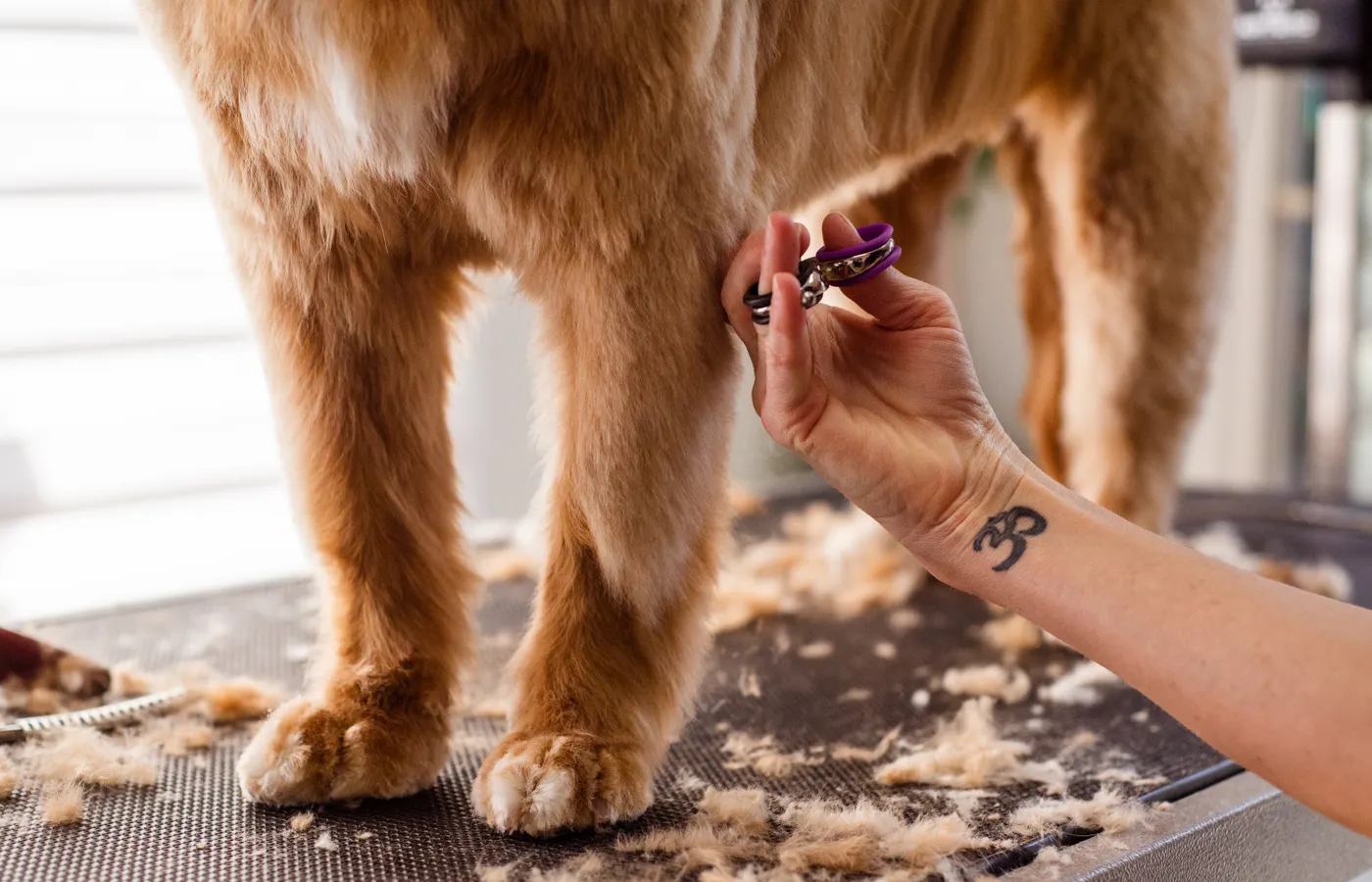
The most repeatable Golden Retriever haircut is an outline trim, not an all over body cut. Ask the groomer to neaten the feet, ears, chest, belly line, rear furnishings, and tail while leaving the back and main body coat at their natural length. If you want any area shorter, name that area and the length. Do not let “summer cut,” “puppy trim,” or “teddy bear cut” stand in for the actual plan.
Hairstyles for golden retrievers begin with the areas that stay long One household had used the same grooming company for about two years. The usual appointment covered the feet and hygiene area . When the owners selected a haircut for their two Golden Retrievers, the company used what it later described as the same cut for every dog. Both dogs came back with short, sharp body hair. The service cost $200, and the owners had specifically asked that the tails not be cut because the company had shortened them without reason before. The dogs were not generally matted. One had a small mat behind an ear, about one and one half inches from the skin, which the owner would normally remove at home. That isolated problem did not explain shortening both bodies. A useful outline request says what to do with each fringe. Neaten around the ears. Shape the chest lightly. Even the long hair behind the front legs. Balance the belly line with the front furnishings. Shape the rear without flattening it. Tidy the hocks and feet. Lightly neaten the tail while keeping its length. Then add one separate sentence: do not run a guard comb or clipper over the back or sides. That last sentence matters because some shops count feet and a sanitary area as a bath service, while owners may hear “haircut” and picture the same natural dog with cleaner edges. The service label does not resolve the difference.
Summer cut for golden retriever can mean two opposite results One owner used a photograph of the same dog after an earlier appointment with the same groomer. The groomer asked whether the owner wanted a summer cut. The answer was no. The request was for the usual Golden cut with a little extra removed around the rear because that hair grew quickly and became dirty. Clippers were not expected. The dog still came back much shorter across the body, and the owner decided not to return. Another owner already knew a familiar groomer who could hear “summer cut” and deliver a shorter trim without shaving. After trying a new groomer, the same phrase produced a drastically shorter result. The phrase had not changed. The person interpreting it had. In a third case, matting behind the ears was supposed to be cut out. The owner believed that meant removing the affected spots. The groomer instead sheared the whole coat and called the result a summer cut. These experiences point to a practical rule. Use “summer” to explain why you want easier cleanup or shorter furnishings, then describe the cut without that word. Mark the back and sides as no cut zones if that is your intention. Identify the rear, belly, feet, ears, and tail as separate decisions. If a mat must be removed, agree on the boundary around that mat before the rest of the coat is touched.
Golden retriever teddy bear cut must be translated into body areas An eight month old Golden Retriever went to a groomer for the first time under a booking described as a puppy trim. The owner expected the scraggly rear hair and long foot hair to be cleaned up. The husband was persuaded to approve a teddy bear cut as a way to keep the dog cooler, even though summers in their northern mountain region were generally mild. The returned dog had a short, uneven body that no longer matched the owner’s picture of a Golden Retriever. Teddy bear can describe a rounded finish, but it does not tell you whether the rounding will be created at the edges or by shortening the whole body. Before approving it, ask four direct questions. Will clippers or a guard comb cross the back? How much length will remain on the body? Will the chest and rear feathering remain visible? Will the tail stay full? If the desired result is a softer, rounded outline, say that the rounded effect must come from scissor work on the perimeter. If the groomer believes the body must be shortened to create it, the two of you are discussing a different haircut.
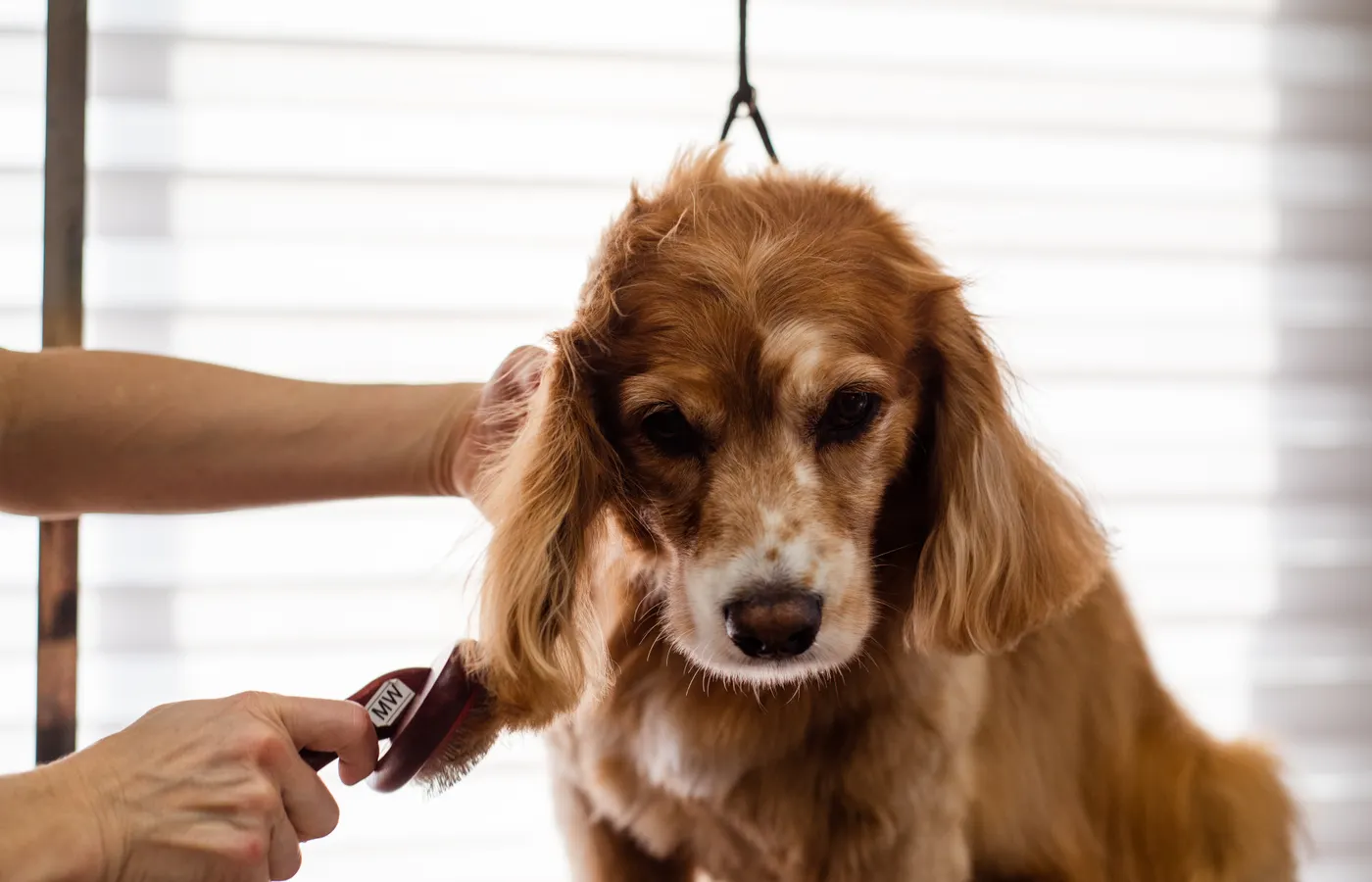
A number still needs a tool and a boundary A four year old Golden had received the requested result for the first three years. Then the regular groomer moved. A replacement cut the coat so short that skin could be seen, even though the standing request was to leave about one and one half inches and retain a feathered look. At a later visit, another substitute confirmed the saved instructions and still returned another unexpectedly short cut. Another owner asked only for the feathers to be cleaned up for hot weather. The dog came back with body hair shortened to roughly one to two inches. Those cases show why a length by itself is incomplete. One and one half inches left after scissors touch the longest furnishings is not the same instruction as one and one half inches over the entire torso with a guard comb . Put the number beside both an area and a tool. For example, ask to shorten only the rear furnishings to a stated point with scissors while leaving the back untouched.
Decide at drop off what requires a phone call The safest handoff includes a stop rule. Tell the salon to call before using clippers on any body area that was not named, before expanding a small mat removal, or before replacing the requested outline with a shorter style. Make sure the person receiving the dog records that rule where the groomer will see it. At pickup, the most useful question is not the name of the finished style. Ask which areas were cut with scissors, which were touched with clippers, and whether any instruction changed during the appointment. If the answers do not match the agreement, the problem is visible immediately instead of being hidden behind a familiar haircut name. For a Golden Retriever, a successful haircut should leave no mystery about what was removed. The groomer should be able to point to every cut area, name the tool used there, and explain why the rest of the coat was left alone.